
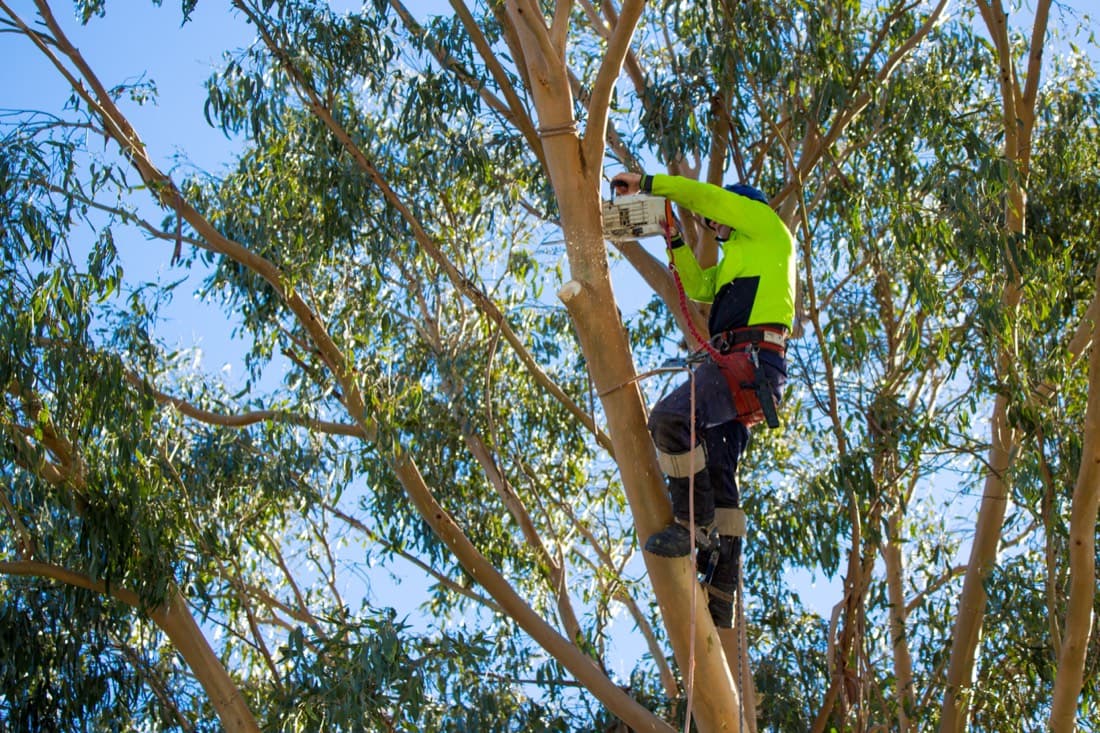
In Queensland everyone says lopping. You look for a tree lopper the way you look for a plumber, and plenty of good operators happily use the word because it's what customers type. But in arboriculture, lopping and pruning are two very different things, and knowing the difference can save you a dying tree and a bigger bill down the track.
What lopping actually means
Lopping is cutting branches back to stubs or taking the top off a tree at an arbitrary height, without regard for where the tree can naturally recover. Think of a gum cut flat across the top at fence height, or limbs docked halfway along their length.
It looks like a big result on the day. The problem is what happens over the following two to five years.
Why topped trees become dangerous
- The stubs die back, and decay travels down into the trunk and major limbs
- The tree responds with epicormic shoots, fast weak regrowth sprouting from just under the bark
- Those shoots grow quicker than the original canopy and are only anchored in the outer wood
- Within a few years you have a taller, denser, weaker tree than the one you started with
That regrowth is the part people underestimate. A topped gum doesn't stay short. It races back with weakly attached growth that's far more likely to fail in a storm than anything you removed. You've paid to make the tree more dangerous.
What good pruning looks like
Proper pruning works with the tree's structure instead of against it. Every cut is made back to a growth point or the branch collar, so the tree can seal the wound and keep its natural shape. The Australian standard for this is AS 4373, Pruning of Amenity Trees, and it covers the techniques a qualified arborist uses:
- Deadwooding: removing dead and dying limbs, the ones that actually fall
- Crown thinning: selectively removing inner growth so wind passes through the canopy
- Crown lifting: raising the lowest limbs for clearance over roofs, driveways and pools
- Weight reduction: shortening long horizontal limbs back to strong growth points
- Formative pruning: shaping young trees so they never develop bad structure at all
A well pruned tree often doesn't look dramatically different from the street. That's the point. It's lighter, safer and healthier without the shock response.
Is lopping ever the right call?
Occasionally, yes. Some situations call for hard cuts: making a storm-damaged tree safe before a full removal, reducing a dying tree in stages, or managing hedging species that tolerate it. The difference is that it's a deliberate choice with a plan behind it, not the default treatment for every tree.
And if a tree genuinely needs to be that much smaller forever, the honest conversation is usually about removal and replacement with a species that fits the space.
What to ask whoever quotes your job
You don't need to know the standards yourself. Just ask two questions: what exactly will you cut, and what will this tree look like in three years? A good arborist will talk about growth points, structure and regrowth. If the answer is just take the top off it, get a second quote.
We quote pruning and removals across the Redlands and Greater Brisbane every week, and we'll always tell you straight which one your tree actually needs. The quote is free either way.
Got a tree on your mind?
Free, no-obligation quote, same-day callback.