
Every summer, South-East Queensland faces its share of wild weather, from heavy rain and flash flooding to powerful winds that can send branches crashing down on homes, cars and powerlines. The severe weather season runs from October through April, and in the Redlands the afternoon storm cells barely need an introduction. Preparing your property before the season isn't just smart, it's essential.
Where trees actually fail in storms
The biggest risks are usually the ones you can't see from the ground:
- Deadwood: dead limbs hidden in a green canopy are the first things a gust removes
- Weak branch unions: tight V-shaped forks with bark trapped in the joint split under load
- Overextended limbs: long horizontal branches act as levers, and the leverage wins
- Decay at the base or in the trunk: fungus brackets and hollows mean less solid wood holding everything up
- Waterlogged ground: after days of rain, even sound trees can go over at the roots as the soil turns to paste
That last combination, soaked ground then a wind burst, is how most whole-tree failures happen here. It's why the second half of a wet summer is often worse than the first storm of the season.
What a pre-season tidy actually involves
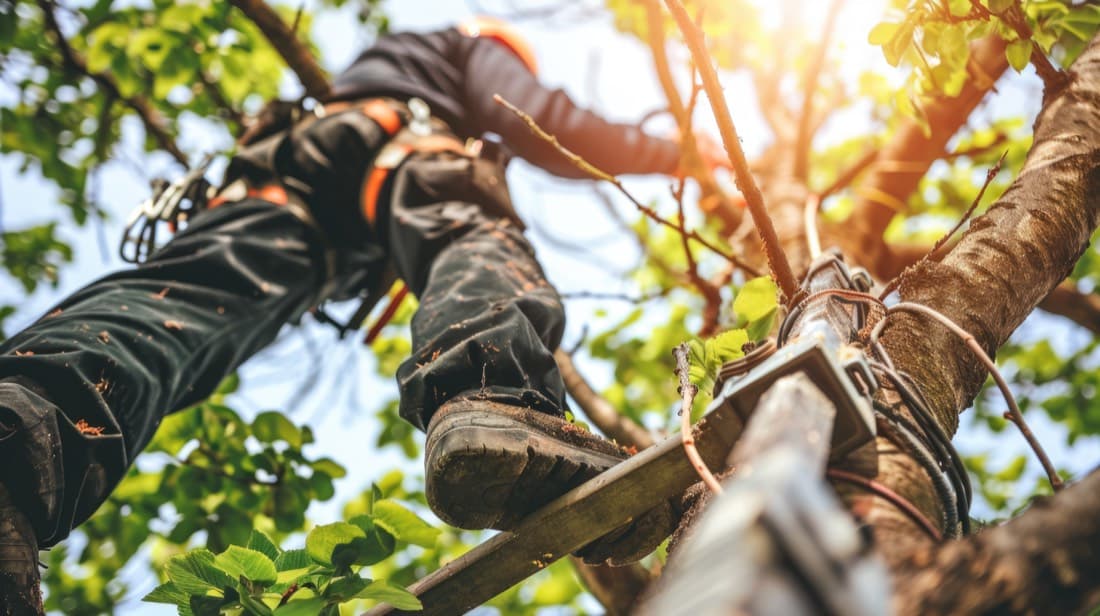
A pre-summer visit is mostly pruning, not removal. Deadwooding takes out the guaranteed missiles. Weight reduction shortens the lever arms on long limbs over the house, trampoline or parking spots. Crown thinning removes selected inner growth so wind passes through the canopy instead of pushing on it like a sail. On most established trees that's a few hours of work, and it changes how the whole tree behaves in a blow.
It's also the time to deal with the obvious candidates: anything dead, anything already hanging, and anything touching the roof, gutters or powerlines. Branches near powerlines are never a DIY job, and clearance work around the network has its own rules, so flag them and we'll tell you who does what.
A ten-minute check you can do yourself
- Walk the yard after the next windy day and look for freshly dropped twigs from one particular tree
- Look up into each big canopy for brown, leafless or hanging limbs
- Check trunk bases for mushrooms, conks or hollows
- Look for soil cracking or lifting on one side of a tree, especially after rain
- Note anything within falling distance of where cars park and kids play
None of those alone means a tree is coming down. Any of them means it's worth a professional look before the season, not after.
Don't leave it until the warnings start
Every November the same thing happens: the first big cell rolls through, and the following fortnight books out with emergency work at emergency urgency. The same prune in September is calmer, cheaper and done before it mattered.
If you've got large trees near the house, a quick assessment now is cheap insurance. We'll tell you honestly what needs attention and what's fine to leave, and the quote costs nothing. Give us a call before the season turns.
Got a tree on your mind?
Free, no-obligation quote, same-day callback.